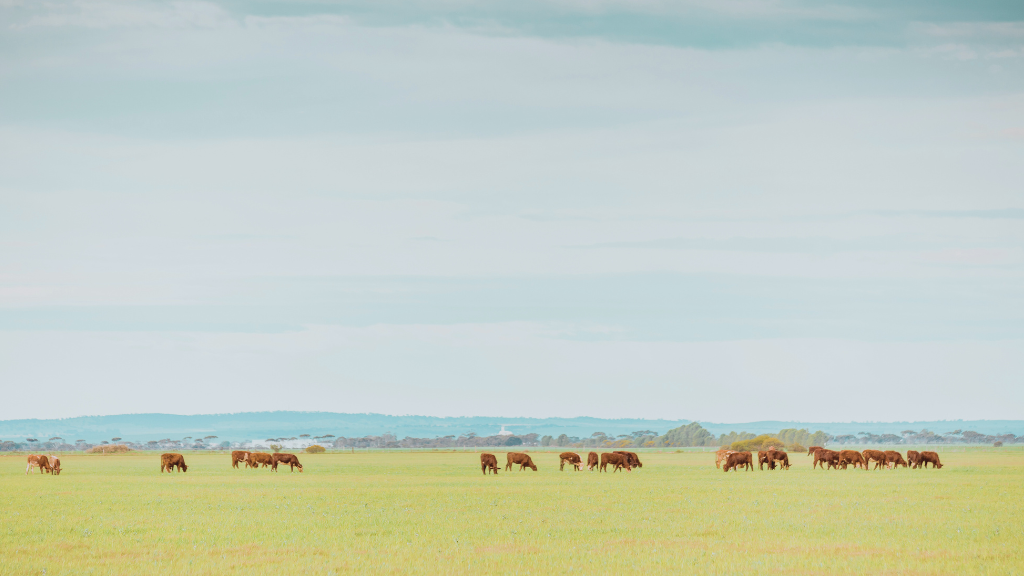
As summer rolls in and dry feed quality starts to decline, livestock producers across South Australia begin looking for reliable grazing options. Most seasons, this resembles legume or cereal stubble. But with late spring rainfall in parts of the state and soil temperatures on the rise, now is the perfect time to consider summer forages that deliver fast establishment, strong regrowth and high feed value.
Below is a practical overview of several proven summer grazing options available this season, including millet, sorghum, forage brassicas and summer canola, to help you plan ahead and keep livestock performance on track.
1. Shirohie Millet – Fast-Growing Summer Feed
Best for: Quick feed, dryland systems, flexible grazing
Sowing rate: 15–25 kg/ha (dryland)
Soil temperature: Sow once soils reach 14°C
Shirohie millet remains one of the most popular summer forage choices across Australia. It’s a fast-growing, high-yielding, leafy millet ideal for grazing, hay or silage. Producers value it for:
- Rapid establishment
- High-quality, safe feed at all growth stages
- Strong regrowth after grazing
- Reliable performance under dryland conditions
Note: Millet supply is tight nationally this season, so expect prices to be slightly higher than normal.
2. Revolution BMR Forage Sorghum – High-Performance Hybrid
Best for: Intensive livestock systems, high feed demand
Sowing rate: 3–5 kg/ha (marginal dryland)
Soil temperature: Sow once soils reach 16°C
Revolution BMR is one of the leading brown mid-rib (BMR) forage sorghum hybrids on the market. Built from a BMR sorghum × BMR sudan grass cross, it offers:
- Exceptional feed quality
- High yield potential
- Fine stems and high leafiness
- Safe grazing due to very low prussic acid levels
- Excellent vigour and recovery
This makes Revolution BMR an outstanding choice where maximum summer biomass and high animal performance are the priority.
3. Greenland Forage Rape – Versatile Year-Round Feed
Best for: Multi-graze potential, flexible sowing times
Sowing rate: 3–5 kg/ha (dryland)
Sowing window: Late summer through spring
Greenland forage rape offers excellent versatility, performing well in situations where moisture is available. Key benefits include:
- High yields in both winter and summer sowings
- Quick to first grazing
- Multiple grazing opportunities
- Late flowering, making it well-suited to late-summer sowing
It’s a dependable option for producers wanting a high-quality brassica feed that adapts to seasonal conditions.
4. Compass Chicory – High Digestibility & Strong Animal Performance
Best for: Liveweight gains, finishing stock, high-digestibility systems
Sowing rate: ~3 kg/ha (dryland)
Compass chicory is a short-term, insect-tolerant variety known for:
- Excellent digestibility
- Strong livestock preference
- Low bloat risk
- Deep taproot for improved water-use efficiency
- Strong tolerance to wet and acidic soils
It’s a great option for boosting animal growth rates in summer and autumn when pastures decline in quality.
5. Feast CL Winter Canola – Graze-and-Grain Flexibility
Best for: Dual-purpose production (grazing + grain)
Sowing rate: 3–4 kg/ha
Sowing window: Late September to late December
Hyola Feast CL is a high-performance winter hybrid bred to deliver both grazing opportunities and grain yields up to 20% higher than comparable options. It is:
- Early maturing
- Strong under grazing pressure
- Suitable for late-spring to late-summer sowing
- A versatile option for mixed-farming systems
Important: Avoid sowing into January or early February, as excessive heat can hinder establishment and recovery.
Choosing the Right Summer Forage for Your Farm
Season length, soil moisture, livestock class, and grazing intensity will all influence which summer forage is best suited to your operation. Millet and sorghum remain the backbone of summer feed systems, while chicory, forage rape and graze-and-grain canola add flexibility and resilience.
If you’re planning a summer feed program, now is the time to secure seed, particularly with tightening supply in some varieties.
Need Help Planning Your Summer Grazing Program?
Our agronomy and livestock teams can help you assess your paddocks, compare options and lock in the best seed for your system.
Contact your local AW Vater & Co branch or visit us in-store to discuss current availability. There are plenty of other forage options available if these aren’t the right fit. We’re here to help you keep stock performing and pastures productive.