Treating stored grain is essential, whether you’re storing seed for next season or waiting for the right price. Insect-damaged grain can be downgraded, reducing quality as well as potential profits. However, several measures can be taken to mitigate this risk. Here are our top 4 tips.
1. Prevention is better than a cure.
Best practice involves starting with clean storage and combining chemical protectants with meticulous hygiene and aeration cooling (especially useful in unsealed storage areas when fumigation is impossible). The job begins before harvest by cleaning storage sites and harvesting equipment. Getting this done properly will help give protectants the best coverage and remove any potential nests where pests can survive. Including aeration cooling will also provide an unattractive environment for any pests.
Also, you want to ensure you’re not storing grain with high moisture content. Aim for less than 12.5% (the lower, the better). Logically, if keeping seed for next season, it pays to try and harvest before any harvest rainfall.
2. Know Your Treatment Options
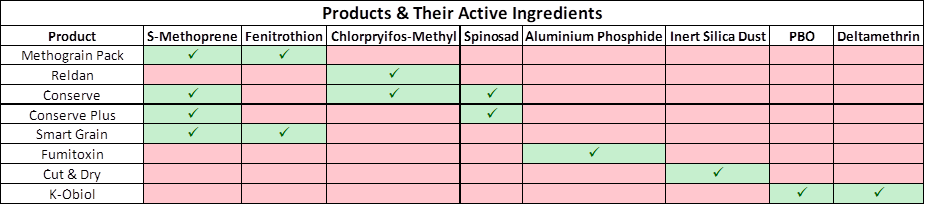
All chemical products work differently and will have different withholding periods. For general knockdown of pests, there are a couple options. One way is using fumitoxin tablets that are dropped into gas-tight silos, but these are an S7 poison and will require you to have a current chem cert for purchase. Other products, like Fenitrothion or Cut N Dry, are generally applied as a liquid or a powder onto the grain itself, or onto the surfaces of sheds or silos.
Extra protection can be found in the Insect Growth Regulator (IGR) type of treatments, like S-methoprene. These inhibit the insect’s life cycle by preventing them from reaching maturity and thus prevent further infestations. Insects grow by molts, meaning they grow a new exoskeleton under their existing one before shedding the old one, allowing the new one to swell and harden. This means they stay at juvenile stages, can’t reproduce, and stop feeding.
The most popular products, like SmartGrain Dual, incorporate both a knockdown and IGR. SmartGrain Dual also boasts a helpful 24-hour withholding period and up to 9 months of protection.
Currently, the products we carry are SmartGrain Dual, Fenitrothion 1000, Fumitoxin, Cut & Dry powder, Conserve, and Methograin IGR 300.
3. Make sure your treatment matches your target.
Got Fenitrothion in your shed and thought you’d use it to wipe out Lesser Grain Borer’s? Think again. Make sure the product you’re using is targeting the insect you’re targeting. Insect traps can help you here. Always read labels and check the table below to ensure you’re not wasting your time and money.

4. Don’t rely on memory – keep records.
It’s essential to keep records for several reasons. One is to ensure you adhere to any withholding periods that may affect grain saleability. It’s also crucial to ensure proper timing for insect treatments.
For more information on our products and what will work for you, come in store or contact one of our agro’s.