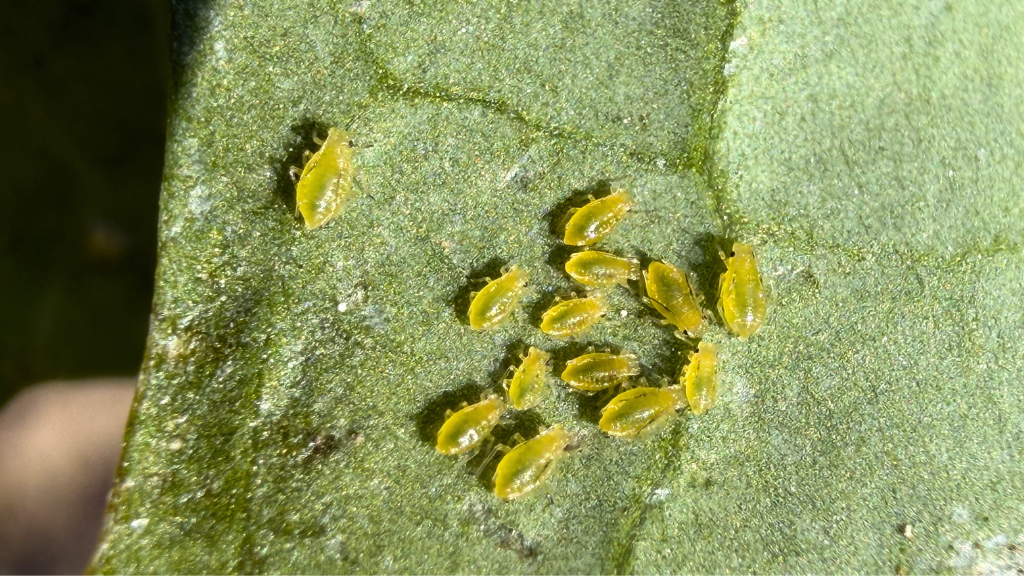
Green Peach Aphids (GPA) have again been present across many canola paddocks this season, with populations varying from isolated colonies through to numbers requiring control.
While many growers have already made insecticide applications where needed, and it’s more important to monitor establishing crops, GPA remains a pest worth monitoring throughout the season, particularly where favourable conditions allow populations to rebuild.
Why Green Peach Aphids Are A Risk
Unlike some aphid species that cause obvious feeding damage, the greatest risk from GPA is its ability to spread plant viruses, particularly Turnip Yellows Virus (TuYV).
GPA feeds by sucking sap from crop plants and can be found in canola, pulses and a range of weed hosts. Populations can increase rapidly under suitable conditions, with multiple generations produced throughout the year.
Direct feeding damage is usually limited in healthy crops, however large infestations can place additional stress on plants, particularly during dry periods.
What do they look like?
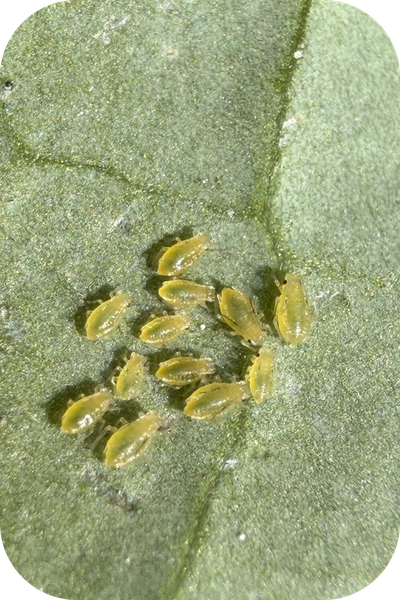
GPA grow up to 3 mm long and can vary in colour from shiny pale yellow-green, green, orange or pink. Adults are oval-shaped and can be winged or wingless. As below.
Turnip Yellows Virus (TuYV) – The Bigger Concern
Turnip Yellows Virus (TuYV) is one of the most significant viral diseases affecting canola. Infection can reduce grain yield and oil content while impacting overall crop performance.
Early infections generally have the greatest impact, making GPA management during crop establishment particularly important.
Symptoms can include:
- Reddening or purpling of lower leaves
- Discolouration beginning around leaf margins
- Stunting or uneven crop growth
- In some cases, no obvious symptoms at all
Because symptoms can be difficult to identify, virus presence is often underestimated in the paddock.
What We Found This Season
Throughout autumn and early winter, GPAs and TuYV were detected in volunteer canola plants, along roadsides, and a number of young canola crops across the region. While many paddocks remained below economic thresholds, some crops required intervention where aphid numbers increased and virus risk was considered significant.
Growers who regularly inspected crops were generally able to identify issues early and make timely management decisions.
Key insecticides we’re using to target GPA include:
– Aria 500WG from FMC
– Transform from Corteva
– Versys from BASF
– MainMan 500WG from UPL
Monitoring Remains Important
Even where crops have already been treated, it’s worth continuing to monitor susceptible paddocks.
When checking crops:
- Inspect the underside of leaves.
- Look deep within new growth and rolled leaves.
- Check multiple locations across the paddock.
- Pay particular attention to crop edges and areas near weed hosts.
Regular monitoring helps determine whether populations are declining naturally or beginning to rebuild.
Managing GPA Effectively
One of the ongoing challenges with GPA is insecticide resistance. Populations across Australia have developed resistance to several commonly used insecticide groups, reducing the effectiveness of some products.
For this reason:
- Avoid unnecessary insecticide applications.
- Rotate insecticide modes of action where possible.
- Follow label directions carefully.
- Consider beneficial insects and integrated pest management principles when making spray decisions.
Correct identification is also important, as not all aphid species present in canola require the same management approach.
Need Help?
If you’re finding aphids in your canola or pulse crops and aren’t sure whether action is required, speak with one of the AW Vater & Co agronomists. We can help identify aphid species, assess risk and discuss the most appropriate management options for your situation.
For further technical information on Green Peach Aphid and Turnip Yellows Virus, refer to the latest GRDC resources like their GPA Best Management Practice Guide and their Manage Turnip Yellows Virus in Canola Guide.