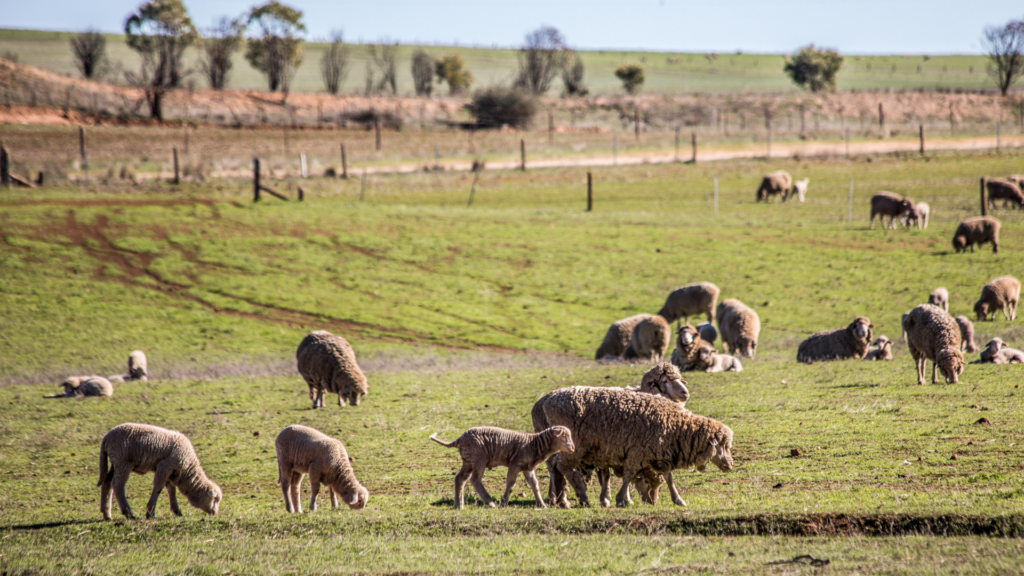
Now is a great time to get out and do some tissue testing on pastures. As deficiencies can be hard to pick and can impact plant productivity before any visible symptoms appear, tissue testing is the best way to assess all micronutrient levels. Similarly to in-crop tissue testing, checking your pastures’ micronutrient levels can save you from wasting money on unnecessary trace element applications. It also helps you correct any imbalances caused by overuse of lime and nitrogen – both of which can impact micronutrient levels in the plants.
Remember: Always test for soil acidity first, before trying to fix micronutrient levels. Soil pH levels need to be addressed first as these will impact on micronutrient availability.
For example, two essential minerals for pastures are molybdenum and boron. Legumes rely on these for effective nodulation, nitrogen fixation and seed set.
Molybdenum is essential for legume growth, and deficiencies will likely show up first in clovers, medic and lucerne. They will look stunted with mottled leaves and leaf margins; rhizobium nodules may also be pale or colourless. Deficient legumes will also have reduced or no nitrogen fixation, and correcting these levels can have very visual effects. In grasses, molybdenum is utilized in the process of reducing nitrate back to ammonium, and lower levels can block this process. It is also important to remember that molybdenum can become unavailable at low soil pH levels, so check your pH levels and rectify this issue first.
Note: Be careful not to overdo it on molybdenum application, as it may reduce copper availability to livestock.
Boron is vital for the nodulation of roots in legumes as well as a range of plant functions from cell growth to seed set and applications where low levels have shown large seed yield increases.
It is common to see below optimal levels these two micronutrients in tissue tests results taken across southern Australia, in particular, boron in ryegrass and clover, and molybdenum in lucerne and clover. Low levels can have a significant impact on pasture growth and persistence, and most of the time it doesn’t take much effort to correct these levels. Boron is mobile in soils, so doing a 0-10cm soil test may not give you the full picture if the plants are pulling it from below this depth.
If you are concerned about pastures not performing their best, get it tissue tested. We are happy to come out and do it for you or give you more information on what to do, just call one of our agro’s.