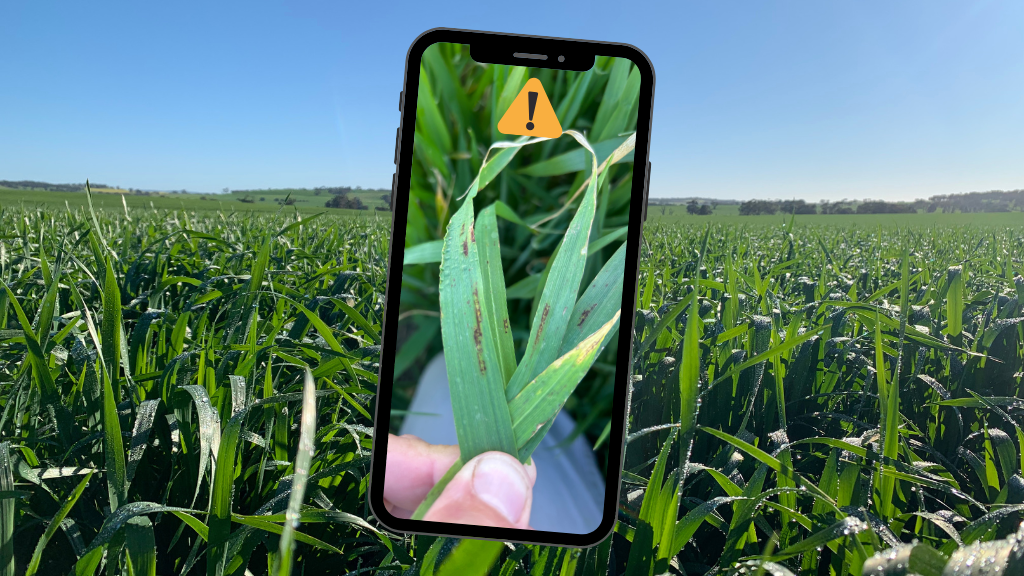
In their latest Cropwatch newsletter, SARDI reported that they had detected a mutant form of net-form net blotch (NFNB) in barley on the Yorke Peninsula in 2024, which had triple fungicide resistance. Samples were collected from a paddocks at Warooka, Corny Point, and Paskeville on the YP and submitted for lab testing, which recently confirmed varying levels of resistance to different fungicide groups, these being:
- Group 3 (DMI)
- Group 7 (SDHI)
- Group 11 (QOI)
The mutation F129L in Group 11 (QOI) fungicides was first detected in Yorke Peninsula trial samples in 2022, so it’s not new. But the current findings are the first time F129L has been associated with an actual paddock-level fungicide failure. That this mutation now occurs alongside DMI and SDHI resistance really compounds the challenge. As these are the only three fungicide groups registered for the control of a range of disease options in barley in Australia, this drastically restricts control options.
In saying this, as of the time of writing, our agronomists have not seen, or had reported to them, any paddock failures as of yet.
However, it is critical to be vigilant of any applications performing worse than expected and to continue to mix and rotate fungicide groups. This is a good general reminder to all growers that if you see anything that doesn’t appear to be performing like it should, always let your agronomist know. Spores can spread by wind, so proactive monitoring and responsible fungicide use are key for all barley growers.
What should you do?
Below are SARDI’s best practice tips:
- Inspect barley paddocks regularly – especially those sown into infected stubble or showing early leaf spotting symptoms.
- In the absence of any resistance, most fungicides should work well provided they are applied correctly.
- Where resistance is detected, some products will struggle/fail to control the disease:
- Group 3 DMI resistance: epoxiconazole and propiconazole will be severely impacted. However, all fungicides from this group will see a decline in efficacy.
- Group 7 SDHI resistance: fluxapyroxad will be severely impacted. The same situation applies to other fungicides from group 7. Bixafen seems to be the least impacted by current resistance.
- Group 11 QoI resistance: azoxystrobin will be more affected than pyraclostrobin. In the presence of group 11 resistance, this group should be avoided if possible. But if required then pyraclostrobin in a mixture would be best.
It’s also important to keep in mind the principles in the AFREN FR5 (Australian Fungicide Resistance Extension Network’s ‘The Fungicide Resistance Five’) so that we don’t rely on fungicides alone.
These include:
- Avoid susceptible crop varieties
- Reduce disease carryover by using sowing times and distances to your advantage.
- Use non-chemical control methods, i.e. wider rows, stubble management, green bridge management.
- Spraying strategically
- Rotating or mixing fungicide groups
As a general reminder, below is a table of fungicide resistance status for wheat and barley in South Australia.

The role of genetic resistance is also becoming critical. You may want to consider newer barley varieties offering improved NFNB resistance, even if yields differ. For instance, even though some varieties may yield lower, they might be more profitable where fungicide efficacy is compromised. We’ll also keep you updated with resources like our Seed Variety Guide, which will give updates on NVT Disease Ratings.
For more information, give one of our agronomists a call.