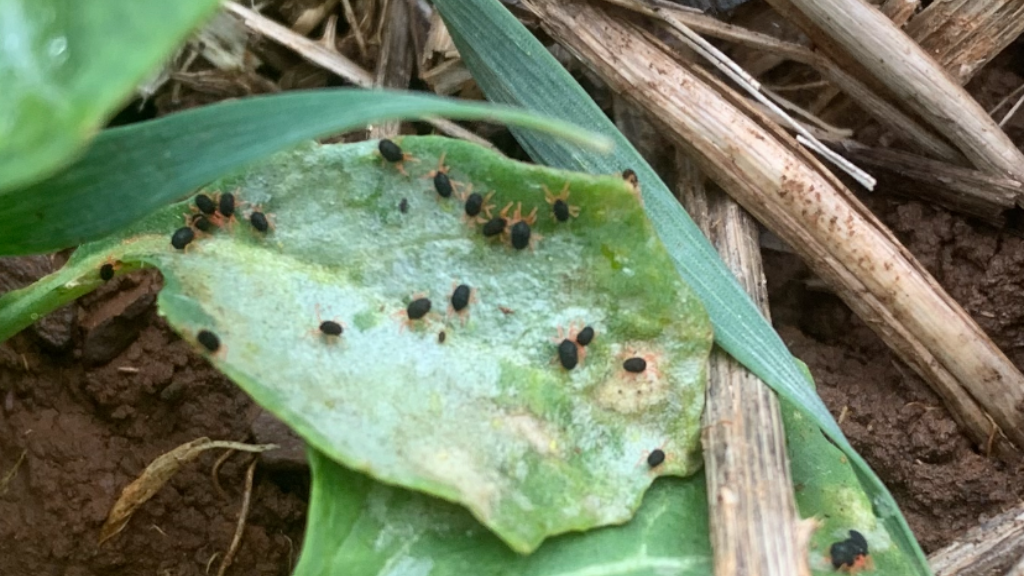
As of last year, there has been an update to the TimeRite strategy, leading to earlier estimated TimeRite dates as RLEM responds to climatic changes.
If you are unaware, TimeRite is a tool that predicts the best spring spraying date to control redlegged earth mites the following autumn.
The prediction is based on when redlegged earth mite diapause eggs will likely be produced for a particular location.
Over summer, RLEM exist as diapause eggs (a period of suspended development) to avoid the heat and lack of food. Diapause eggs can withstand summer conditions and persist into the next winter growing season. These eggs are laid during spring and will hatch in the next autumn once the environmental conditions are met. This means limiting the number of diapause eggs produced during spring is essential, as it helps to reduce RLEM abundance the following autumn.
TimeRite has been used in our farming systems unchanged for over 20 years and understandably needed to be updated to adapt to our new climatic and environmental conditions. The update has improved model accuracy by incorporating changing climates, increased flexibility of control programs through a better understanding of control efficacy before and after TimeRite, and improved accessibility through a modern and easy-to-use interface.
These updates have seen the TimeRite date brought forward, and now there is a date range where the efficacy of your spray remains at least 95% of the optimum.
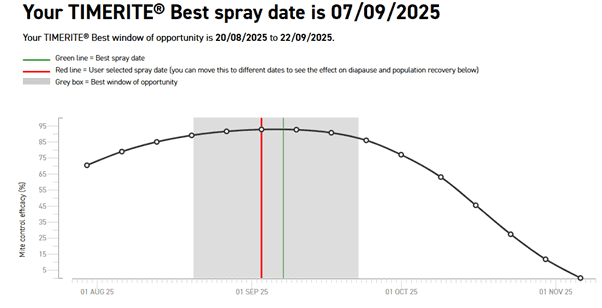
Figure 1. New TimeRite date for Saddleworth, showing it has come forward since mid-late September and now includes a date range. The updated calculator and more information can be found here at wool.com/timerite.
Along with upgrading the TimeRite tool, an RLEM hatch timing tool has been developed to help growers understand crop risk during the autumn period and enhance monitoring for RLEM pressure at crop emergence. It gives a prediction on unhatched, soon-to-hatch, and hatched eggs using regional temperature and rainfall conditions and validates against field-collected mites.

Figure 2. Showing egg status and predicted hatch date for Saddleworth as of 12th Feb 2025. This tool can be found here.
With all of this information, it is important to know that resistant RLEM populations have been detected across Western Australia, South Australia and Victoria since the screening began in 2006.
Resistance has been found in parts of South Australia since 2016 of SPs (Alpha-cypermethrin, Talstar, Trojan) and Organophosphates (Dimethoate, Chlorpyrifos, Lemat). So before going out and spraying it is important to know the resistance status on your property.
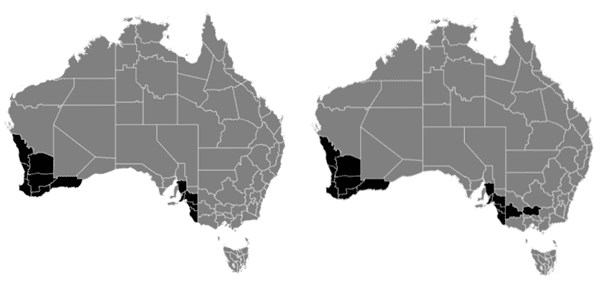
Figure 3. The current distribution of RLEM resistance to pyrethroids (left) and organophosphates (right). Regions with known resistant populations are shown in black. Found here.
For more information, get in touch with one of our agronomists.