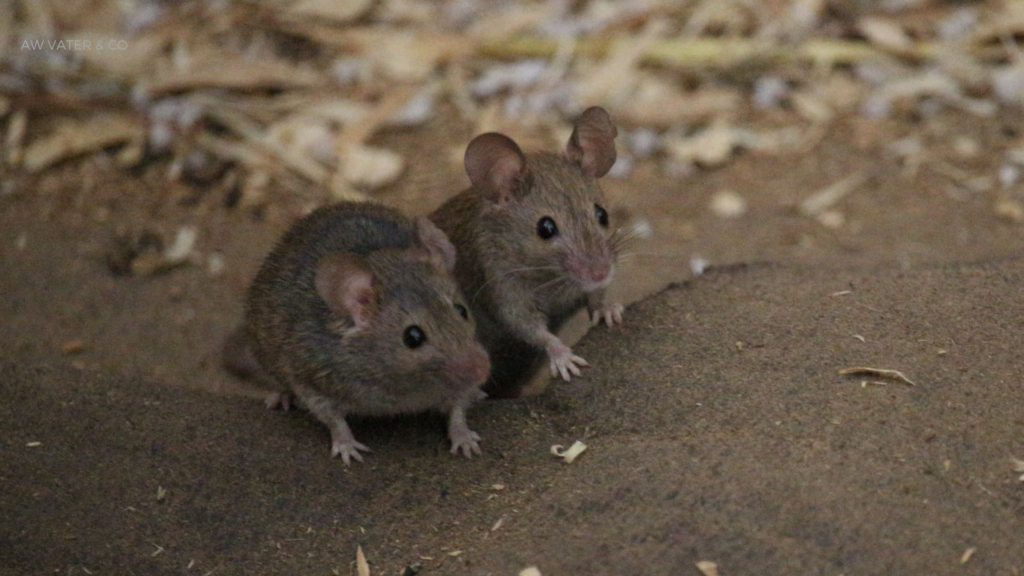
There are many old wives’ tales about mice, but have you been mistaking them for truth? We debunk seven of the common ones below so you can tell fact from fiction.
Tale 1: We need rain to drown the mice. Their numbers will slow down when it rains.
False. Mice dig their burrows down and then dig upwards to make the nest higher than the bottom of their hole, protecting them from water when it rains. Plus, mice can swim very well. Even when there has been heavy rain and the soils are waterlogged and burrows flooded, they will move to higher ground.
Tale 2: The mice will disappear once we get some cold nights and frost.
This is, again, false. Mice will stay warm in their burrows and only experience the cold weather when out foraging – where they can do more damage as they require more food/energy to keep warm. You might not see as many during late autumn and winter because breeding normally stops, but their presence won’t go away as long as they have food available. This is why you must remain vigilant and keep looking for damage in crops.
Tale 3: I burnt off my paddock, so the mice will have either died from suffocation or they will soon as all the food is gone.
Welllllll, partly true, but mostly false. Mice are rarely affected by the quick burning of stubble, as they are safe and cozy inside their burrows. Burning paddocks can often help reduce some food sources and mice numbers. However, mice are known to store food in their burrows that can sustain them, and once that is gone, they will be on the move.
Tale 4: I didn’t see any mice the other night running around, so I’ll be fine.
Wishful thinking, but there’s a good chance it’s false. Mice are very shy feeders and don’t emerge from burrows every night. Mice are less likely to be active in bright moonlit nights or cold and wet conditions. They will have enough reserves in their burrows to avoid bad weather. A good indication is to do a chew card test, found here.
Tale 5: Mouse bait will no longer be effective after rainfall.
Only partially true. Genuine Mouse-Off and other Zinc Phosphide baits are semi-weatherproof. The active ingredient, Zinc Phosphide, needs to encounter a weak acid to gas off and break down, such as a mouse’s stomach acid. Therefore, the bait can withstand some rainfall.
Tale 6: It’s too dry for a mouse to survive. There is no water around.
False. Unlike rats, mice don’t need to drink water to survive. In fact, they can go a month or more without directly consuming water by extracting the moisture from the food they consume.
Tale 7: We had good germination of volunteer cereals, so there isn’t any feed left for the mice.
Way false. Small germinating cereals are actually high energy and protein feed for mice and can trigger a rapid build-up in mice numbers. After rains have germinated volunteer cereals, mice numbers can rapidly increase and be sustained for some time. However, you can mitigate this by quickly spraying volunteers, thus reducing mice feed and numbers.